Four Types of Dies
- Dec 23, 2016
- Hits: 148
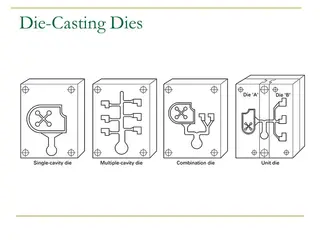
There are four types of dies: 1. Single cavity to produce one component. 2. Multiple cavity to produce a number of identical parts. 3. Unit die to produce different parts at one time. 4. Combination die...
Hot Chamber Vs. Cold Chamber Die Casting
- Dec 26, 2016
- Hits: 284
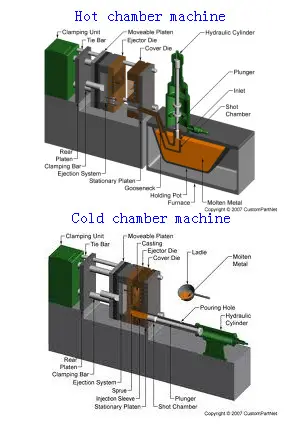
Die casting is an efficient manufacturing process used to mass-produce parts in a wide range of shapes, and these parts make their way into common items in our homes and workplaces. Die casting delivers...
Die Casting vs. Other Processes
- Dec 26, 2016
- Hits: 39
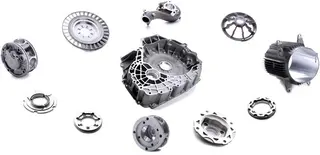
Die casting vs. plastic molding - Die casting produces stronger parts with closer tolerances that have greater stability and durability. Die cast parts have greater resistance to temperature extremes...

Automation and Quality Control
- Dec 26, 2016
- Hits: 32
Modern die casters use a number of sophisticated methods to automate the die casting process and provide continuous quality control. Automated systems can be used to lubricate dies, ladle metal into cold...

Die Construction
- Dec 26, 2016
- Hits: 32
Dies, or die casting tooling, are made of alloy tool steels in at least two sections, the fixed die half, or cover half, and the ejector die half, to permit removal of castings. Modern dies also may have...
Choosing the Proper Alloy
- Dec 26, 2016
- Hits: 25
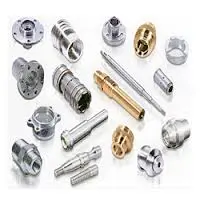
Each of the metal alloys available for die casting offer particular advantages for the completed part. Zinc - The easiest alloy to cast, it offers high ductility, high impact strength and is easily plated....
The History of Die Casting
- Dec 26, 2016
- Hits: 66
The earliest examples of die casting by pressure injection, as opposed to casting by gravity pressure, occurred in the mid-1800s. A patent was awarded to Sturges in 1849 for the first manually operated...